User login


Recent comments
- Tops...
by kevin kretschmer - Where in Batavia can I buy...
by Bob Harker - Thanks for the update,...
by Howard Owens - it shows you what good...
by william tapp - Thank you very much, Bud, I...
by Jennifer Keys - Congrats to Yancy Fancy! An...
by Bea McManis - Corner of Ellicott St and...
by Chelsea Dobson - wish i had knew i love to...
by william tapp - Three guys wearing kilts came...
by Chris Olin - Congratulations to you...
by bud prevost
Recent posts
- Motorcyclist reportedly struck on Ellicott
- Yancey's Fancy earns Gold Medal in world's biggest cheese contest
- Batavia Police investigating home invasion burglary
- Batavia's Richmond Library holds 'Family Primetime Story Hour' on Thursday evenings
- Batavia Players give Shakespeare's 'Richard III' a contemporary twist
- Zambito to be new county attorney; Bergen's Bausch to represent District 2
- Police Beat: Batavia man accused of trying to steal from CSX Railroad
- Today's Poll: Are you participating in NCAA bracket pool?
- Today's Deals: Sallome's, Margarita's, South Main, Matty's, Settler's, Enchanted Florist
- A wee bit of the Irish in Batavia tonight

Site Sponsors
- 3 D Wine & Spirits
- Adam Miller Toy and Bicycle
- Affordable Floor Covering
- Alberty Drug Store
- Alex's Place
- American Home Remodeling
- Anglican Community Church
- Baker's Frontier Kitchens
- Barrett's Batavia Marine and Sporting Supplies
- Batavia Downs Casino
- Blue Pearl Yoga
- Bonarigo & McCutcheon
- Bontrager's Auction
- Bontrager's Real Estate
- Carlson's Studio
- Cedar St. Sales and Rentals
- Center Street Smokehouse
- Charles Men's Shop
- Classic Home Improvements
- The Color Salon
- Country Cottage
- Crazy Cheap Cars
- D&R Depot Restaurant
- Delavan's Restaurant and Tavern
- Dog Grooming
- The Enchanted Florist
- Fastec Automotive
- Genesee Dental Group
- Glitz and Glamour
- Great Kutz
- Hair Studio 25
- H.E. Turner & Co.
- Holland Land Office Museum
- House of K
- The Insurance Center
- Jackson St. Grill/Belladessa's
- John's Service Station
- Ken Barrett
- KleenAll
- L.C. Mosman
- Lamb Family Medicine
- Lawley Genesee
- Lewis and Lewis
- Main St. Pizza Company
- The Mane Attraction
- Margarita's
- Mark Lewis Agency
- Matteo & Mullen, CPA
- Matty's Pizzeria
- Max Pies
- Movies in Motion
- Neptune's Garden
- Next Level Fitness
- O'Lacy's Irish Pub
- Oliver's Candies
- Optique
- Pauly's Pizza
- Pellegrino Auto Sales
- Present Tense Books
- Pudgie's Lawn and Garden Center
- Roxy's Music Store
- Sallome's Italian Deli
- Select Collision
- Settler's
- Sloat Tire
- Small World Realty
- South Main Country Store
- St. Joseph's School
- St. Paul's Pre-School
- Southside Deli
- T.F. Brown's
- Valle Jewelers
- WNY Fireplace Outlet
- Wortzman Furniture
Stafford Garden Club
Presentation "Lasagna Gardening" . What is Lasagna Gardening? Step by Step directions to build a Lasagna Gardening.
Stafford Garden Club, Stafford Town Hall, Rt. 237, Stafford, NY
Date: March 17, 2010, Time: 7 PM
Contact Sue Briggs (585-344-0834) for any questions.
Stafford Garden Club
Meeting Date: 11/18/09, Time: 7pm at Stafford Town Hall, Rt 237, Stafford, NY. We’re making a Boxwood Tree decoration. Bring a small container. Contact Sue Briggs, 585-344-0834 for more information.
Act now to avoid blighted tomatoes and potatoes next year
The Northeast Organic Farming Association is urging farmers to act now to reduce the risk of late blight next season.
NOFA-NY (www.nofany.org <http://www.nofany.org/> ) is a non-profit educational organization committed to promoting a sustainable regional food system.
It maintains that a major outbreak of late blight -- the disease that devastated tomato plantings and reduced potato yields throughout New York State this growing season -- may occur any year when growing conditions (wet, cool weather) favor its development.
While farmers and gardeners can't control the weather, they can reduce the risk of another widespread outbreak of late blight by following a few key practices starting this fall.
In our region, the organism that causes late blight survives from one season to the next in living host tissue-infected potato tubers. Tomatoes do not carry the disease over winter because their seed is not infected by the disease.
To reduce the chance of the disease organism's survival, this fall growers should thoroughly harvest all potatoes and then till up all land that grew potatoes. The harvested tubers should be carefully inspected and all infected tubers destroyed: by chopping into small pieces and burying deeply (below 2 feet); burning; feeding to livestock; or spreading on the soil surface so that they will freeze over the winter. Infected tubers thrown into a pile may survive the winter and thus perpetuate the disease.
Growers can continue to reduce the risk of late blight next year by buying and planting certified potato seed tubers. They should also scout last year's potato land for volunteer plants, which should be dug up (including tubers) and immediately destroyed.
Infected tomato seedlings sold through "big box" stores were a major factor in the explosive spread of the disease throughout the state. Gardeners should consider starting their own seedlings or buying them from a local commercial grower.
By following these practices, farmers and gardeners can work together to reduce the chance of a major outbreak of late blight next year and in years to come. More information on the disease and management practices that reduce the risk of its occurrence can be found at the NOFA-NY website (www.nofany.org <http://www.nofany.org/> ), which also has links to other useful sites.
- Billie Owens
- Login or register to post comments
Cornell Cooperative Extension announces fall classes
Cornell Cooperative Extension will be offering its popular coffee-and-dessert series again this fall.
"Hands on with the Harvest" participants enjoy a cup of coffee or tea along with desserts homemade by the Master Gardeners. This season programs will run from 6 to 8 p.m. at the Extension Center on East Main Street in Batavia and will include:
September 28 – Putting Your Garden to Bed. Your gardening tasks do not end with that killing frost. There are many things you can do in your garden to assure gardening success next spring. Let Maud Charpin, a certified Master Gardener, share her knowledge and tips with you.
October 14 – Creating a Back Yard Habitat. Join birding expert Jan Beglinger as she shows you the basics of creating a backyard habitat and helps you to create the right conditions to invite a host of birds, butterflies and other species to your backyard.
October 28 – Growing Culinary Herbs at Home. Would you like fresh herbs through the winter? Find out how to grow them on your windowsill. Master Gardener Paul Saskowski will also be covering what herbs are good for cooking and how to incorporate herbs into your landscaping.
Cost is $10 per class and limited to 15 participants per class. Pre-register by stopping by the Extension Center located at 420 East Main Street in Batavia, visit the website at www.genesee.shutterfly.com <http://www.genesee.shutterfly.com/> , or contact Amy at 343-3040, ext. 106.
- Billie Owens
- Login or register to post comments
Gardeners to host Harvest Gala
Cornell Cooperative Extension of Genesee County’s Master Gardeners will host the annual Fall Harvest Gala from 10 a.m. to 1 p.m. on Saturday, Sept. 12.
It will be at the Cornell Cooperative Extension of Genesee County, 420 East Main St. in Batavia.
There will be a traditional mum sale, perennials right from the master gardeners' own gardens, houseplants, a Chance Auction, free soil pH testing and refreshments for a nominal fee.
Don’t miss your chance to pickup some great plants for your own garden.
For more information contact Jan Beglinger, at Cornell Cooperative Extension of Genesee County, at 343-3040, ext. 126 or stop by the Extension office at 420 E. Main Street in Batavia.
Master Gardener says consider a cutting garden
Press release
Master Gardener Column by Gail Culver, Consumer Horticulture Educator, Cornell Cooperative Extension
Consider a cutting garden
Everyone loves to give and receive flowers. For gardeners, the ultimate pleasure is to be able to cut flowers from their own garden to bring indoors and to give away to friends and family. Many also love to have homegrown blossoms, foliage and seed heads handy for fresh or dried floral crafts and cooking. However, the problem is that picking flowers from the garden reduces the floral show in the yard. It is a tough decision whether to cut flowers for indoors or leave them on display outdoors. The perfect solution to this problem is to establish a separate cultivated area specifically as a cutting garden. Then you can have your flowers and pick them too!
Fill your cutting garden with plants that produce the flowers and foliage you love. Use it as an area to experiment with new plants and colors. Place it where it is not on public display and indulge your fancy. Consider making it part of your vegetable garden. This is a production garden, created to be cut down, so do not worry about design correctness.
Create a cutting garden much the same way you initially establish a flower garden. Choose a site that receives generous sun and prepare the soil so that it drains well. Add humus in the form of compost, peat moss or chopped leaves to improve clay or sandy soil. Create one or more beds of whatever size and shape to accommodate the available space. They can be tucked into sunny spots along the back boundary, in a neglected corner or behind the garage. By their very nature, they are transient, so they can be easily changed or reconfigured next season if necessary.
While cutting gardens often look beautiful at the peak of the season, this is incidental. So, because they are not intended for display, a purely utilitarian layout makes the most sense. Once they are established, they are easier to maintain and require much less attention than ornamental beds. For this reason, cutting gardens usually resemble traditional vegetable gardens. They are typically planted in widely spaced rows that are easy to move through and between while planting, thinning, fertilizing, deadheading and of course, harvesting.
Be sure and mix into the soil a granular, slow‑acting fertilizer at the beginning of the season. This will provide consistent, balanced nutrition to the plants over many, many weeks. Periodic doses of diluted liquid fertilizer sprayed on plant foliage will boost the energy of certain heavy blooming plants during peak production.
Rather than interplant seeds or young transplants of many different kinds of flowers, group the species of plants for efficient use of space and easy harvest. To get maximum production, plant annuals in succession ‑‑ early season, mid‑season and late-season bloomers grouped together. Cluster plants with similar requirements for sun, water and drainage for easier maintenance. Plant tall types together, away from where they might shade smaller ones.
To minimize watering and weeding maintenance, spread a 2- or 3-inch layer of some organic mulch on the soil around the plants in the cutting garden as soon as they are a few inches tall. It does not have to be attractive, so use whatever is inexpensive and at hand, such as chopped leaves, shredded newspaper or straw. The mulch will discourage weeds, keep the soil moist longer and contribute nutrients to the soil as it decomposes in the summer heat. Add to the mulch layer if it breaks down to less than an inch. If you grow plants that are notorious self‑seeders, such as spider flower (cleome), removing the mulch at the end of the season will help to clear away most of the seeds as well.
To spur and maintain flower production of annuals, pick blossoms regularly. Deadhead those that remain and become faded. This prevents them from forming seeds, which slows flower production. Water about an inch per week if rainfall is unreliable. Unmulched beds will need more frequent watering, especially in the summer. Keep a lookout for aphids on tender young growth or plants that are stressed and unhappy. Pinch infested tips off or wash the foliage with a strong stream of water from the hose. Insecticidal soap spray will take care of stubborn infestations.
As soon as the blossoms from a stand of flowers have been cut and/or the plants begin to weaken, pull them, cultivate the bed and plant new seedlings to provide cut flowers for the weeks to come. For instance, plant only pansies in an area for an early season supply of flowers. Then, when summer heat arrives, replace them in that area with American marigolds or zinnias.
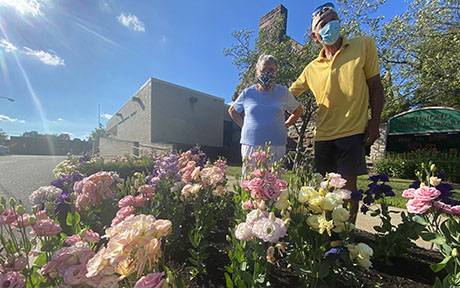
Lots of different kinds of flowering plants are suitable for a cutting garden. Long‑stemmed annuals or perennials are most useful. Typically, colorful annual flowers dominate these gardens, because they are such enthusiastic bloomers. Cutting their blossoms only encourages them to produce more. All kinds of daisies are enormously popular and combine well with lots of other flowers.
Long-blooming perennials have a place in the cutting garden as well as in the more formal flower border. Plants such as coral bells and fringed bleeding heart will produce flowers all season, especially if they are regularly picked. Some, such as purple coneflowers and black‑eyed Susan’s produce bold, bristly seed heads that are ideal for floral crafts. Of course perennials can be depended upon to bloom next season so there is no need to replant that part of the cutting garden.
Don't forget foliage plants that contribute texture and color to both fresh and dried arrangements. Silver‑leafed Artemisia varieties, lamb's ears and herbs such as lavender contribute grayish‑silver foliage that is both handsome and aromatic. (The source of this information is Professor Raymond T. Fox, Department of Floriculture, Cornell University, Ithaca, New York.)
For gardening tips and assistance, Master Gardeners are available Monday through Friday, from 10 a.m. until noon at the Cooperative Extension office, 420 East Main Street, Batavia. They may be reached by calling 343-3040, ext. 127, or by stopping in at our office, or by email HYPERLINK "mailto:geneseemg@cornell.edu" geneseemg@cornell.edu.
- Billie Owens
- Login or register to post comments
Master Gardener's tips on container gardening
Press release:
MASTER GARDENER COLUMN by Gail Culver, Consumer Horticulture Educator at Cornell Cooperative Extension
CONTAINER GARDENING
One of my favorite forms of gardening is container gardening. My container gardens are only limited by imagination and the plants available. Anything that can grow in a garden can also be grown in a container. Just provide those plants with a few basic needs: a suitable container, a growing medium, water, nutrients and light and they will grow.
Of America’s 60 million gardeners, probably 90% of them grow plants in containers. Some gardeners don’t have a yard. Also, container gardening is a smart alternative if you are restricted by too much shade, poor soil, too little time, limited mobility or a difficult climate. Best of all, growing in containers brings your garden right up close, creating a sense of intimacy that you just don’t get in an ordinary backyard garden.
Here are some simple tips to help you with your container gardening:
Containers for your plants must be big enough to support your plants when they are fully grown, hold soil, and have adequate drainage. Without proper drainage, the plants can suffer from inadequate root aeration and excessive moisture. They will literally rot. Have drainage holes on the sides of pots rather than the bottom so excess water can drain away and roots won’t get waterlogged. Line the bottom of your pot with newspaper (a coffee filter works in smaller pots) to prevent soil loss. Also, line the hanging baskets with sphagnum moss for water retention.
Anything and everything that fulfills these basic requirements can be used. Use your imagination! For example, among the containers that can be used are clay pots, plastic pots, terra cotta pots, bushel baskets, hanging baskets, wooden crates (lined with plastic so that they will hold soil), barrels, heavy gauge wire baskets, glazed ceramic, hay racks (again lined with plastic), wooden planters, concrete containers, and even old boots or shoes. As you can see, you do not need to spend a lot of money on containers. Keep your eyes open for suitable containers at garage sales. Watch discarded household items put out for collection. If you want something fancier, try building your own planting box out of wood.
Scrub old pots with a 10% bleach solution before reuse. This will kill disease, pests, and accumulated fertilizer salts. Season new clay pots by submerging them in water for 15 minutes before you fill them with soil. This forces air out of pore spaces and will aid in keeping soil moist.
Most plants, especially annuals, require at least 5-7 hours of sun per day. Grow plants together that have the same light and moisture requirements. When planting large pots you may want to place the container on a caddy before you fill it.
- Billie Owens
- Login or register to post comments
Garden Day Celebration & Plant Sale
Presented by the Master Gardeners from Cornell Cooperative Extension of Wyoming County.
Saturday, May 9th, 2009, from 9am to 12pm. Join us under the big tent at Cornell Cooperative Extension, 401 North Main Street, Warsaw, NY.. There are demonstrations of Gourd Growing & Painting, Gladioli Growing & Arranging, a watercolor artist, Flower Pounding, and Garden Garnishes.
We will have free soil testing (ph), expert advice from Master Gardeners with over 160 years combined experience in plant science from hostas to growing potatoes, from shade plants to heirloom tomato plants, and from blueberries to pear trees.
The Master Gardeners will have baked goods & coffee for sale along with perennials, annuals, herbs to numerous to count, Martha Washington Geraniums, many colors of ivy and other geraniums, lots of vegetable plants, hanging plants, and even Yukon Gold Seed Potatoes. All for sale at low prices. We sold 20 hanging baskets of Fuschia in the first hour last year. Please call (585)-786-2251 for more information.
Many thanks go to the Arts Council for Wyoming County for sponsoring this event. Without their help and the donations of countless others, the funding for the CCE and Master Gardener Educational programs would be severely limited. We in Wyoming and Genesee Counties are lucky to have the Cornell Cooperative Extension's help and resources available to all gardeners, farmers, and lovers of flowers in our area.
Check out http://www.townofattica.net/gardenday.htm for additional details.
Reflection and Time
There has been alot of discussion this week over issues and incidents. Clearly, opinions have differed. Some in support and some against. People in this country have the blessing of freedom of speech. Sometimes we take it for granted. When the storm of comments wained, one thing became clear. We need to focus on the important things. Our health, our loves and our life.
I had time to take a breathe and plan my attack. Instead of wonder how much worse this could get, I changed direction. I went to the local stores and searched for plant seeds. Spring was about to come to my little house. The weather might have different plans but I didn't care. This is a way to focus and plan. To plot where every plant would go and to wait for the results.
My kids are an integral part of the planning. First, are there truly kid friendly plants out there? The answer of course is yes. Kid friendly isn't the issue actually. Peas, carrots, corn and the occassional fresh tomato meet with the occassional "Mom can I have another one?" I have concerns about their welfare however as I imagine my 17 month old re-inacting Godzilla scenes through the rows of plants. Things are going to get crushed like the city blocks leveled in the movies.
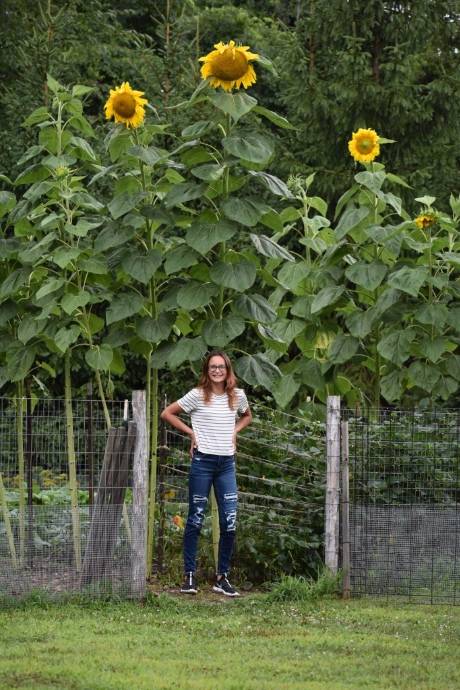
For the girls in my life, the pick was flowers. "Mom can we get this one?" or "OHHHHHHH, thats soooooooo beautiful." I prefer the sunny disposition of sunflowers myself.(I can't lie, I love johnny jumps ups and crocuses too.) They are rugged and friendly. These guys could survive my son and his antics. For my son, I picked peas and beans. I have never met a kid more crazy about his vegetables. This kid could eat a whole can of green beans at one sitting if given half a chance.
Just imagine his delight when they are fresh from the garden. Picked as the dew drips from the leaves. Mmmmm. I can taste it now. The peas will never make it to the kitchen.
Seeds are a cheap fix to anyones woes. A couple dollars can buy you healthy snacks that will last all summer long. Especially if they happen to be in patio pots filled with Cherry Tomatoes. Yum.
This year we are going for some larger and more exciting prospects. We have a huge lawn now. My plans for the garden will probably start small but will end up taking over an acre or so. Just kidding!! I want to try potatoes, bright lights swiss chard, corn and pumpkins. I have made attempts in the past to try some of these but I never had the right soil or location. This year it will be perfect.
I can see that the hose will need to be ready and available at all times. Bath time for the babes. I'm not talking plants either. In the past my daughters have been knee high in the soil and mud. Now I have three that I need to keep out of trouble. Guess what, the hose will be alot easier.
I look forward to the joy on their faces as the seedlings emerge from the ground. We will care for them, nurture them, and weed them. ( I have a feeling it will only be me weeding them though.) The kids will rig devices to protect the new plants from the rabbits and other critters. Then we will wait. Wait for the first of the crops. We will share them with friends and neighbors. Ahh. I feel better already.
P.S. Does anyone have a rotor tiller I can borrow? :) This is going to take some help.
-
March 18, 2010 - 7:30pm - March 20, 2010 - 10:00pm
-
March 19, 2010 - 4:30pm - 6:00pm
-
March 19, 2010 - 6:00pm - 10:00pm
-
March 19, 2010 - 7:00pm - 10:00pm
-
March 20, 2010 - 10:00am - 4:00pm